Beans: Waiters are usually right

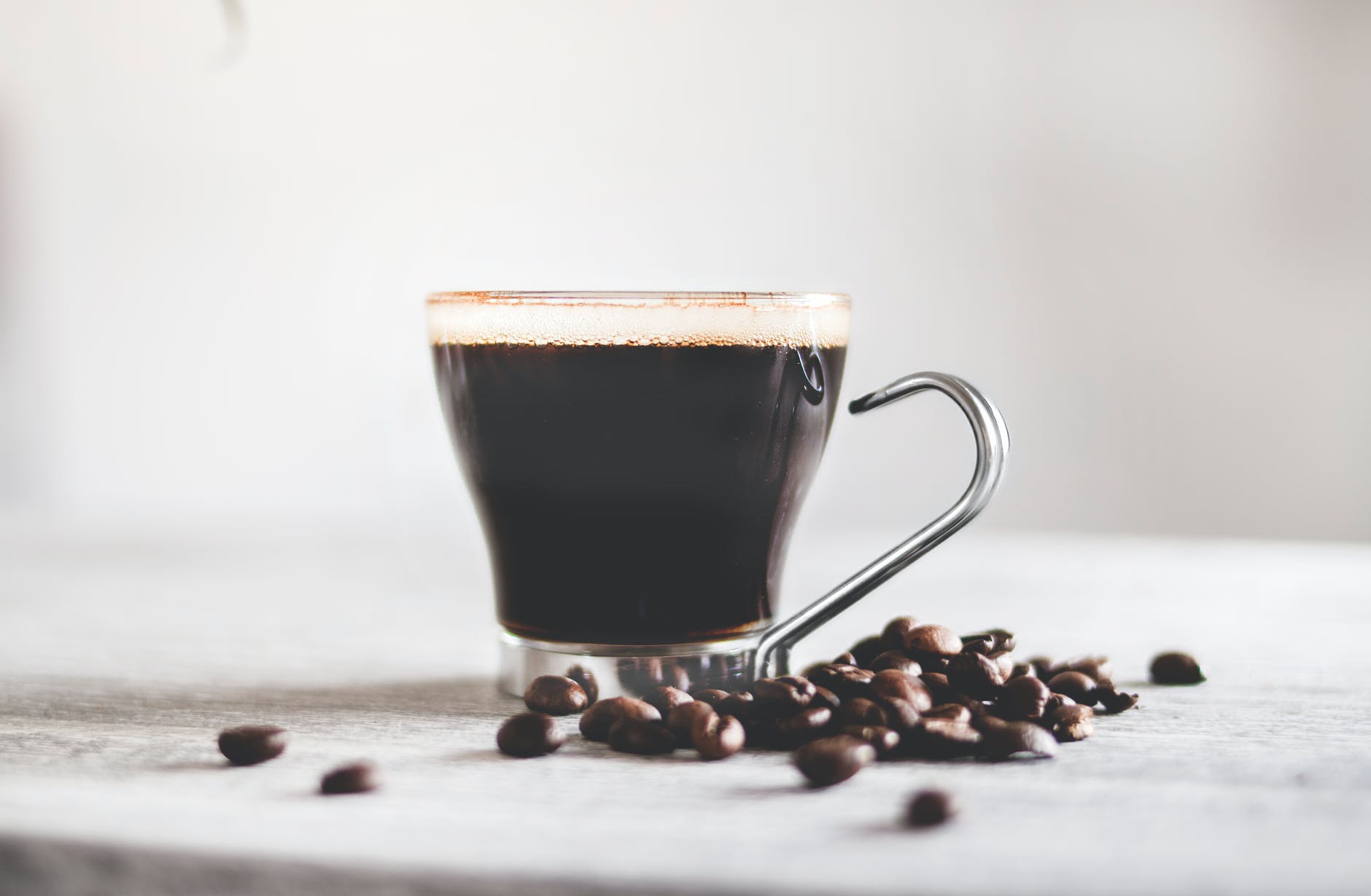
At Butler’s Chocolate Cafe (in Lahore), the coffee is always hot and flavourful and served in heavy, white, ceramic cups, always with a fine chocolate. I have tried them all (over several years) and my favourite was a very dark chocolate with a soft caramel filling. 

The staff are almost as good as the coffee, always polite and cheerful and they remembered me and my seating preference (in the quietest corner) and they remembered that when my cup was empty, yes, I’d like another, please. 
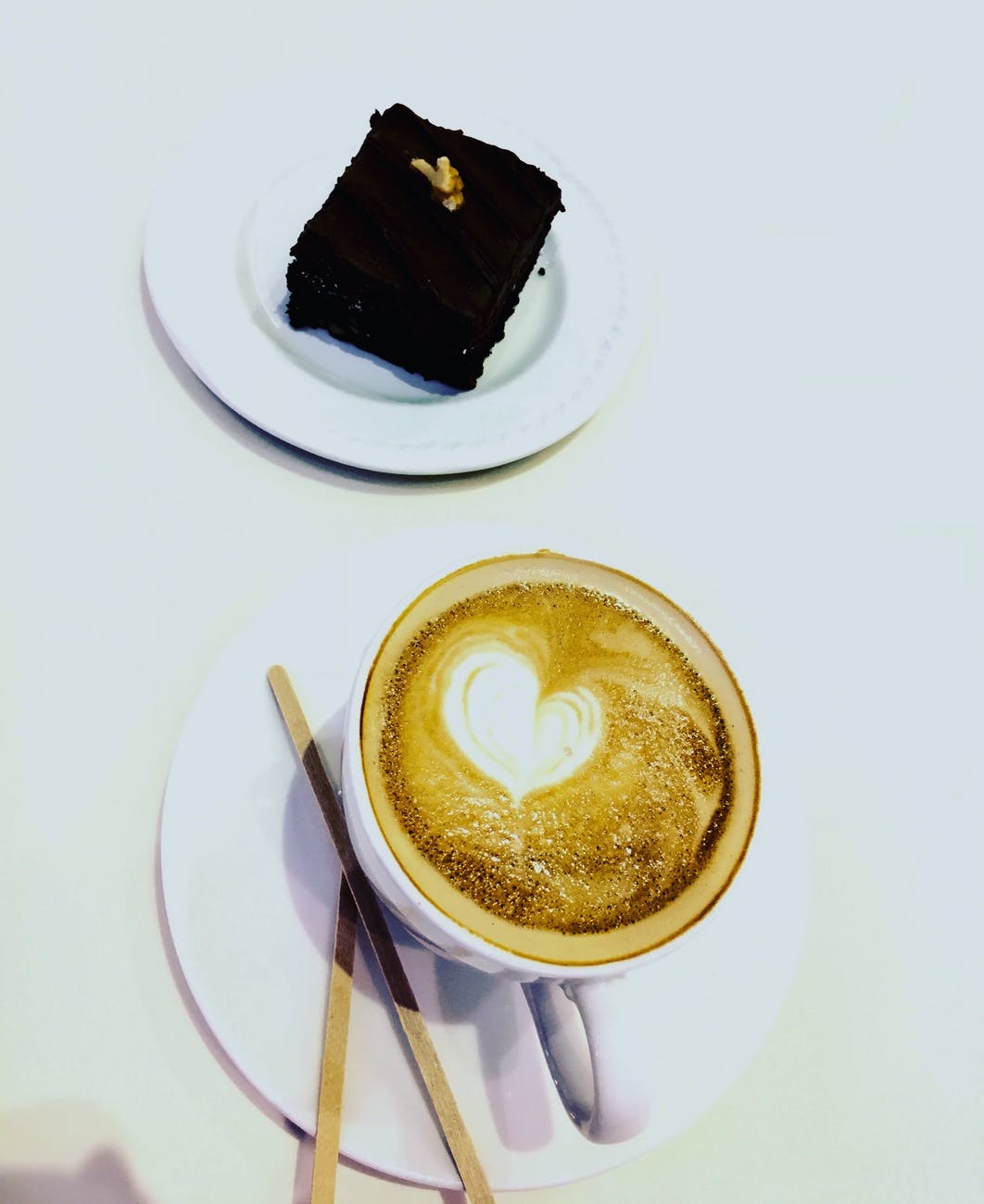
Photo by Rafel AL Saadi on Pexels.com

I was with a group of happy colleagues; our winter vacation was starting the next day so there several cheerful conversations around our table. The waiter worked his way around the customers.

Me: One black coffee please. Large. And a chocolate brownie please. 

Waiter: Yes Sir. And would you like me to vomit?

Now, I hate my job sometimes and if I were a waiter I’d probably hate my job enough to make me feel sick, but what?

Me: Excuse me, what did you say?

Waiter: Sir, would you like me to vomit?

I’m in a foreign country, English isn’t his first language. He has an accent. I have one too. It’s noisy at our table and my hearing is getting old. Think; what could he be saying?  Do you want milk and sugar? Is there anything else you’d like? Do you have a loyalty card? 

Me: I’m sorry, I didn’t understand. What did you say?

Waiter [slowly]: Do    you     want      me     to     vom     it?

Which is exactly what I thought he said.

Me: Sorry, just a moment.

I asked a colleague, ‘Can you please tell the waiter that I’m sorry, I don’t understand…’

She to the waiter: What did you say?

Me: No, not in English, ask in Urdu. 

She: He said he asked you if you want him to vomit. 

Me: What? 

She: You know, in the oven, because brownies are better if the chocolate pieces are melted. 

Me: [Facepalm] Do you want me to warm it?

She: Yes, that’s what he said.

Waiter: Yes, that’s what I said. 

Lesson: If a waiter ever asks if you want him to vomit, save time, accept that waiters usually know best, and just say yes (and always say please).  

Books: The Cat’s Table

The Cat’s Table
by Michael Ondaatje

The Cat’s Table is the story of 11-year-old Michael who is traveling from his father’s home in 1950s Ceylon due to a threat to his or his father’s safety, to live with his mother and attend school in England. The departure from Colombo is both sad and exciting.

Michael’s two on-board acquaintances, both also 11 years old and also bound for school in England, are tough-boy Cassius and the more studious Ramadhin. The trio is infected by their fellow passengers’ curiosity about all of the ships’ passengers. Unhindered by close adult supervision the trio explores the ship while closely observing (spying on) passengers. The three weeks of observations become their extended lesson on how to be adults. Michael’s distant cousin, Emily, helps him to manage his growing anxiety while aboard, as he nears England and his new life and a first-class passenger, Flavia Prins, whose husband is an acquaintance of Michael’s uncle, keeps a slight watch over him, while also serving the trio as their primary source of on-board gossip.

The fellow-passengers are the story’s entertainment and the boys’ lessons in life and adulthood. Miss Lasqueti keeps pigeons and wears a vest of pockets for her birds. Asuntha is a recluse who protects a fatal secret. Sir Hector de Silva lies in his cabin dying because of a curse. Mr Fonseka is an eccentric teacher and a recluse who is protected by his books. Mr Daniels tends his garden of exotic plants in the ship’s hold. Max Mazappa is a jazz musician who is down on his luck and who attracts the amorous attention of Miss Lasqueti, but disembarks when the ship is in Port Said. A rollerskating Australian girl appeals to the boys, but also frightens them. And most-exciting of all is the guarded and bound prisoner who can be seen exercising on deck late in the night. The boys are desperate to know what his crimes were and eventually learn that he is associated with some of the passengers.

Ondaatje writes so beautifully well, at an easy pace, and with a deft ability to paint a vivid scene that I could read all of his books repeatedly (and have done so). 

The Cat’s Table might well be his best work, in my opinion. I enjoyed every page and read it slowly, like it was a fine cup of coffee – one sip, one page, at a time.

Shortly after reading The Cat’s Table I was fortunate to stay in the hotel described in the book’s first chapters, overlooking Colombo’s passenger ship terminal – a most evocative experience. And the coffee at the cafe through the back of the Barefoot shop…, well…, I’ll write separately about that.

Beans: One black coffee, please.

‘One black coffee please. No milk, no sugar.’ As I’ve traveled around the world, this is one of the first things I try to learn how to say in the local language. It always helps to smile, start with a cheerful hello or a good morning.

No milk. It’s probably to do with being 3 or 4 years old, walking back from the milking shed where my father and I had hand-milked a cow, and my father dipping a glass into the still-warm bucket of milk and insisting I drink it. The smell (stomach-wrenching stench), the animal-warmth of it, similar (if you’ll excuse me saying so) to the warmth of a cow’s piss and shit, and the stray pieces of straw from the floor of the milking shed, also in the bucket of slimy, frothy,… that’s enough description. Please don’t ever put milk in my coffee. Please. And that abomination of ‘food stuff’ – powdered ‘cream’ – should never have been released onto an unsuspecting and naive public. Sugar in coffee makes as much sense as putting butter onto a no-fat muffin; it defeats the purpose. Coffee is a strong, acidic, sour hit. Sugar dulls the hit, so why do it? 

Flavoured syrup. This paragraph should not need to be written. Why put chocolate-flavoured syrup into coffee? Or vanilla-flavoured syrup? Or hazelnut? It’s like adding peppermint to chocolate or like eating an orange-flavoured banana. If you want caramel, eat caramel. If you want chocolate, eat chocolate. Why adulterate the beautiful crisp electric flavour of coffee by adding toxic waste into your cup? (Almost all vanilla flavouring, by the way, is a chemical by-product of the paper manufacturing process and nothing to do with the vanilla pod. It’s not toxic, but it is a waste-product.) Each to their own though, go ahead and add a waste chemical to your coffee if that’s what makes your day. I wonder what hazelnut syrup is made from… cow’s piss perhaps. 

So there it is… Bongiorno, uno espresso per favore. Niente latte. Niente zucchero.

One black please. No milk, no sugar.

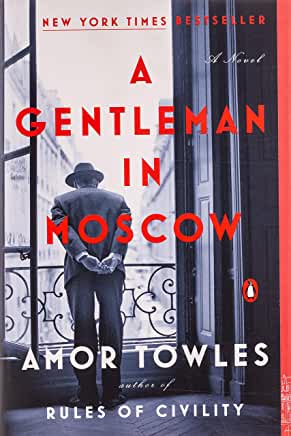
Book: A Gentleman in Moscow

A Gentleman in Moscow
by Amor Towles

A Gentleman in Moscow begins with (ex-)Count Alexander Ilyich Rostov being called to a Peoples’ Commissariat just as the new communist government is cracking down on opposition. Normally an aristocrat like Rostov would’ve been summarily executed, but because he voluntarily returned from Paris at the start of the revolution and because he had written a poem against the old regime when it was still in power which made him a literary hero for the revolution, his life is spared and he is confined, under house arrest, to Moscow’s Hotel Metropol. 

The plot is more of a series of character-driven vignettes – interesting, entertaining and even colourfully humourous at times, the plot doesn’t seem to flow as a novel should. The writing is good, but doesn’t make up for the lack of a plot. 

One of the many characters that enter the Count’s life is a young girl, a gifted musician, and possibly (perhaps I have this right) his grand-daughter. He takes responsibility for her and so she joins him, living in the hotel. The plot suddenly takes off as the Count prepares for the girl’s escape to Paris.

The Count’s character is well-developed as is that of his (maybe) grand-daughter, but most other characters are not well-developed and the reader is left wanting more about the many supporting characters – or perhaps less. 

I like fiction to at least be possible, but A Gentleman in Moscow lacked credibility. I’m sure others will enjoy the book, but for me it lacked substance.

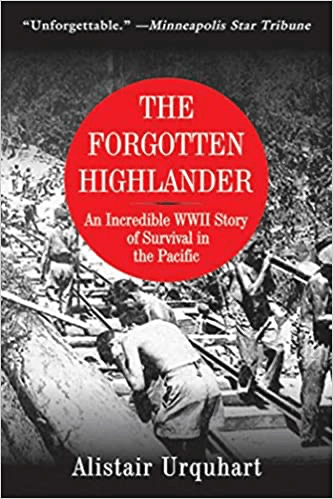
Book: The Forgotten Highlander

The Forgotten Highlander
by Alistair Urquhart

The Forgotten Highlander details the experiences of an ordinary young Scottish man drafted into Britain’s army, shipped off to Singapore, captured, enslaved before returning home to be mistreated and disrespected by the same British army that sent him away to war. I found this autobiography both a harrowing read, but also uplifting – that a man could endure so much cruelty yet not lose his own humanity.

Urquhart was shipped off from his homeland to defend Singapore, but the British army’s arrogance was quickly and decisively swept aside by the invading Japanese military. Urquhart was captured and enslaved. He was just a young lad and his experiences are told in grim detail. Even the train journey was recounted in awful detail. He is put to work by the Japanese on the railroad and then on the bridge over the Kwai River. He and his comrades are starved and beaten and worked to near-death. Urquhart is shipped out to a recovery camp constructed to demonstrate to the Red Cross that Japan’s military was humane.

Next he escapes a sinking ship that was attacked by US aircraft. One of the few survivors, he was picked up by a fishing boat and handed back to the Japanese and put into another prisoner of war camp, this time near Nagasaki from where he experienced the nuclear bomb attack. 

He ends by recounting his appalling treatment by the British army upon his return to the UK and the persistent/permanent effects on his physical nd mental health. 

Despite all of this, he lived till his 90s which is why, ultimately, I found the book uplifting and why I STRONGLY recommend it to anyone who likes to read non-fiction, autobiographies, and good conquering evil.