Author Archives: Tom

Books: The Seventh Son

The Seventh Son, by Sebastian Faulks, begins with an intriguing premise but ultimately doesn’t live up to its potential because of flat characterization and a meandering plot.

The Seventh Son by Sebastian Faulks

The story is spans three decades (from 2030) and follows Talissa Adam, a penniless student who becomes a surrogate for an IVF programme at London’s Parn Institute run by tech billionaire Lukas Parn who is conducting ethically dubious research involving earlier human species. The resulting child, Seth, is raised by his loving parents Alaric and Mary, unaware of his unique biology. The scientific concepts are interesting, touching on evolution and species selection, Faulks fails to bring much depth to the story. The characters are shallow: Parn is a generic tech villain, a ‘man-baby’ whose megalomania feels borrowed from contemporary headlines. But the biggest character error is in the book’s perspective – the story is told from the wrong character (in my opinion) – Talissa and not Seth.

Seth is the genetically engineered child at the story’s heart. He remains distant and opaque and I couldn’t help wondering how much more compelling his story would have been if told from his viewpoint, allowing readers access to his unique take on the experiment that created him.

The pacing suffers in the second half, weighed down by scientific expositions and descriptions of meals that added nothing to the story. At times I questioned whether this was written by Faulks. Where the story could have built tension and philosophical complexity, it drifted into mundane detail.


Books: Time Kneels Between Mountains

Amra Pajalić’s Time Kneels Between Mountains is pitched as a mystery, but what unfolds is something far more sobering and powerful: a visceral account of life during the siege of Srebrenica.

Though fictionalised, this novel reads more like historical non-fiction—so grounded is it in the brutal realities of the Bosnian War. As someone who lives in the region and knows its complex history and culture, I found this book difficult, necessary, and ultimately worthwhile.

Seka Torlak is a strong and determined protagonist whose story echoes the trauma endured by thousands. Her town collapses into violence and scarcity overnight, and Pajalić captures the horrors of starvation, shelling, and moral collapse with haunting precision. The “mystery” centres on Seka’s quest to expose the black marketeers stealing vital supplies—but in truth, we already know how this story ends. It is not the resolution that matters, but the human journey through impossible circumstances.

The plot is taut and well-paced, and the relationships—especially between Seka and Ramo—add warmth and emotional depth. However, I felt more could have been explored in the hinted relationship between Torlak and the doctor’s daughter, which might have added another layer of complexity.

It’s hard to say I “enjoyed” this novel—it hits too close to real tragedy—but I’m grateful to have read it. Fiction like this ensures we do not forget what happened in Srebrenica, and that matters deeply. Pajalić doesn’t offer comfort or easy answers, but she offers something more important: truth through storytelling.

For those interested in the recent history of the Balkans, and especially for those who think they understand it, Time Kneels Between Mountains is a must-read. It’s not a mystery in the conventional sense—but it is unforgettable.


Books: The Last Lifeboat

The Last Lifeboat by Hazel Gaynor is a poignant, emotionally charged novel set against the backdrop of World War II. Hazel Gaynor draws inspiration from real events to tell the intertwined stories of two women: Alice King, escorting a group of children across the Atlantic to safety in Canada, and Lily Nicholls, waiting anxiously in London for news of her own children’s safe arrival. When disaster strikes at sea, their lives become unexpectedly connected.

The Last Lifeboat by Hazel Gaynor

I thoroughly enjoyed the novel, despite a somewhat slow start and an occasionally overly romanticised portrayal of wartime London. Gaynor’s writing is engaging and fluid, capturing both the vast, terrifying isolation of the Atlantic and the quiet, domestic struggles on the home front. This is very much a women’s story — focusing on motherhood, resilience, and the emotional toll of war from a civilian perspective. While this lens brings intimacy and heart to the narrative, it also sometimes lends the story a slightly soft-edged, idealised tone, particularly in the London scenes which seem less gritty than one might expect from the height of the Blitz.

The novel is well-written, though a few Americanisms crept into the British dialogue, which felt a little jarring given the UK wartime setting. The central lifeboat scenes — while tense and moving — could perhaps have been developed even further to fully capture the harrowing ordeal of eight days adrift at sea.

Nonetheless, The Last Lifeboat remains a compelling and heartfelt read, offering a different perspective on the familiar World War II narrative. It shines a light on the lesser-known evacuation of children overseas, and the quiet heroism of ordinary women facing extraordinary circumstances. For readers who enjoy historical fiction with strong emotional threads, this book will not disappoint.


Beans: Scientific American says… (but I say…)

How to make a better coffee? According to a very short piece in Scientific American, a new study in Physics of Fluids has brought high-speed footage and transparent silica gel to the table, revealing how water really flows through your morning ritual.

According to some Physicists, stronger coffee doesn’t necessarily mean more beans. It’s all about how we pour. To maximize extraction, we want the water to spend more time mingling with the grounds and to stir things up—literally. The trick is to pour slowly, and from higher up. This creates a longer contact time and promotes mixing. Use a thin stream from a gooseneck kettle, and you might just brew a more potent cup with fewer grounds.

But let’s be honest: the best coffee isn’t just about the coffee. It’s the flaky croissant on the side, the sunlight on the worn wooden counter, the familiar face behind the machine. It’s the tiny rituals and fleeting melancholies. Because sometimes, the perfect cup is about the whole café-shaped moment it comes wrapped in.


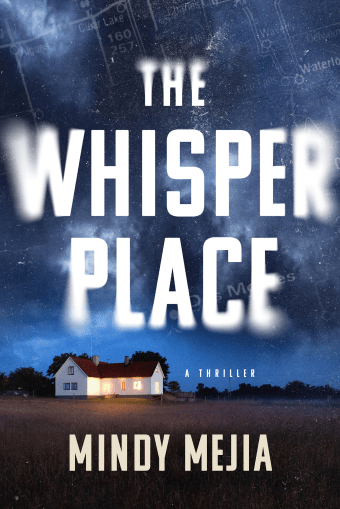
Books: The Whisper Place

The Whisper Place by Mindy Mejia is a thoroughly good read that had me interested and intrigued from the first chapter. Mindy Mejia has crafted a story that is not only well written but also very well paced, with chapters that moved the plot forward while giving just enough space to develop the characters and tension and a few moments when I had the chance to put the book down and think.

The two private investigators, Max Summerlin and Jonah Kendrick stood out as relatable. As a former cop and a psychic detective, they make an unconventional but compelling duo. I did wonder if having a psychic detective might just be a lazy author’s way to solve a difficult crime, but no. Their personalities felt authentic, their backstories were intriguing, and I appreciated how their partnership unfolded throughout the book. Mejia gave both men depth, humour, and emotional complexity, which made me care about them. I’d like to follow their future cases.

The mystery itself is layered and emotional. When a man walks into their office searching for his missing girlfriend who seemingly has no past, Max and Jonah take on a case that takes them from quirky 80s-inspired bakeries to chilling forests and a house full of dread. In parallel, a woman flees across the country, running from her past. As their paths inevitably converge, the stakes rise and the story grips tighter.

One of the things I appreciated most was the clear line between the “good guys” and the villains. Mejia didn’t muddy the waters unnecessarily. She let us feel exactly what we were meant to. I felt fear at times, tension and curiosity throughout, and genuine relief by the end.

The Whisper Place is a rewarding read…; suspenseful, character-driven, and emotionally satisfying. Fans of intelligent thrillers and detective fiction will find a lot to love here. I’m already looking forward to what Max and Jonah investigate next.