Category Archives: book-reviews

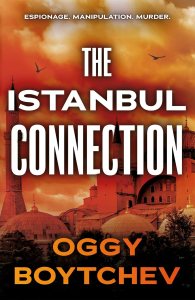
Books: The Istanbul Connection

Istanbul is the perfect backdrop for Oggy Boytchev’s taut, compulsively readable thriller, The Istanbul Connection, and the author exploits the setting.

At the heart of the story is Harry Marks, a tired young UK journalist who is drawn into a covert intelligence operation by the charismatic and enigmatic James. What begins as an unlikely friendship rapidly darkens into something more dangerous: espionage, murder, and manipulation – and money, as Harry finds himself an unwitting pawn in a rogue Anglo-American mission to seize Saddam Hussein’s wealth. Haunted, hunted, and morally compromised, Harry is ultimately forced to choose between loyalty, survival, and the truth.
What distinguishes this book is its confident pace. Boytchev has a strong command of action and plot writing, and he deploys very well. The narrative moves forward with urgency, never pausing to indulge in the kind of laboured introspection that can slow some thrillers to a crawl. Character development is kept lean and purposeful; a deliberate and refreshing editorial choice that keeps the reader firmly in the grip of events rather than psychology.
The writing itself is sharp and assured. Boytchev handles the mechanics of plot, the reveals, the reversals, the escalating jeopardy, with the ease of an experienced storyteller. The moral ambiguity at the novel’s core gives it genuine weight, elevating it above straightforward genre fare.
The Istanbul Connection is a novella that reads with the satisfaction of a full-length novel. It left me wanting more, a sequel perhaps?


Books: Time Kneels Between Mountains

Amra Pajalić’s Time Kneels Between Mountains is pitched as a mystery, but what unfolds is something far more sobering and powerful: a visceral account of life during the siege of Srebrenica.

Though fictionalised, this novel reads more like historical non-fiction—so grounded is it in the brutal realities of the Bosnian War. As someone who lives in the region and knows its complex history and culture, I found this book difficult, necessary, and ultimately worthwhile.

Seka Torlak is a strong and determined protagonist whose story echoes the trauma endured by thousands. Her town collapses into violence and scarcity overnight, and Pajalić captures the horrors of starvation, shelling, and moral collapse with haunting precision. The “mystery” centres on Seka’s quest to expose the black marketeers stealing vital supplies—but in truth, we already know how this story ends. It is not the resolution that matters, but the human journey through impossible circumstances.

The plot is taut and well-paced, and the relationships—especially between Seka and Ramo—add warmth and emotional depth. However, I felt more could have been explored in the hinted relationship between Torlak and the doctor’s daughter, which might have added another layer of complexity.

It’s hard to say I “enjoyed” this novel—it hits too close to real tragedy—but I’m grateful to have read it. Fiction like this ensures we do not forget what happened in Srebrenica, and that matters deeply. Pajalić doesn’t offer comfort or easy answers, but she offers something more important: truth through storytelling.

For those interested in the recent history of the Balkans, and especially for those who think they understand it, Time Kneels Between Mountains is a must-read. It’s not a mystery in the conventional sense—but it is unforgettable.