
The Architects of Control, by Harold Greene, is a chilling, high-stakes political thriller that feels uncomfortably real. The line between digital influence and psychological warfare is paper-thin, and this novel reflects that.
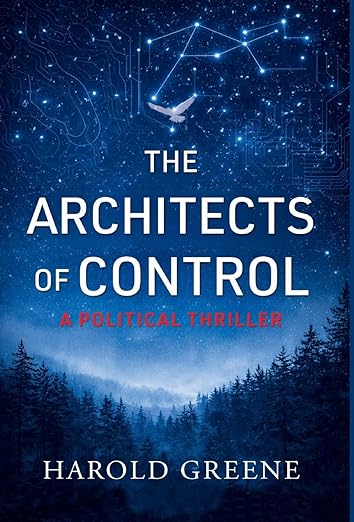
The plot focuses on a looming US election, under the watch of international observers, and uncovers an uncomfortable truth: democracy isn’t being threatened at the voting stations, but in social media, by a sophisticated, slow-burning algorithm that hijacks public opinion and then manipulates individuals’ opinions. The narrative blends tech, politics and psychology; the algorithm doesn’t just spread disinformation; it gradually re-engineers people’s cognitive biases and manipulates social identity over time and over a vast population, but at the individual level.
A small group of central characters stumble on this tech-driven master of voter control and what follows is a masterclass in paranoia. As the group tries to expose the operation before election day, the burning question of who they can trust becomes a psychological minefield. The author executes a series of betrayals, revealing that the enemy lay deep in the characters’ own trusted circles. The novel’s central relationships are powerful and deeply grounded in vulnerability and compromised loyalties.
Ultimately, The Architects of Control succeeds because it delivers a thoroughly satisfying conclusion. It is a taut plot centred on a thought-provoking exploration of people-control, institutional corruption, and resilience. It is a must-read for anyone who likes their political suspense laced with intellectual weight, psychological depth, and lots of adrenaline.

