Books: The Father’s Son

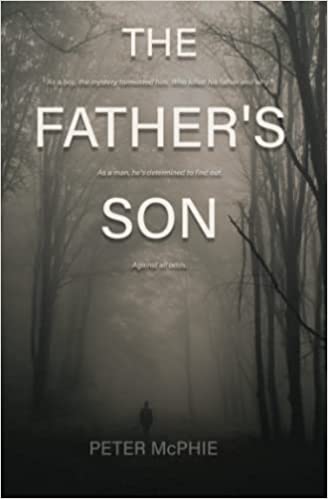
The Father’s Son
by Peter McPhie

What an excellent read – I loved The Father’s Son from start to finish.

The plot is relatively simple: boy’s father (a policeman) is kidnapped and never seen again. As his mother had already died, the boy goes into the government care system and has a rough start to life outside the care system. With some luck and hard work, the boys grows up to become an FBI agent. He’s called to help root out ‘inside’ corruption in the police and so is working undercover in Philadelphia. The crime he’s working on is linked to his father’s disappearance and ultimately it becomes clear that he is tracking down his father’s killer. As he gets closer to the killer, his own son is kidnapped. And as it’s a suspense, I’ll leave my plot description there.

The plot is well-constructed and credible. The characters are kept to a minimum and are each well-created with enough back-story to make them credible and developed. The good characters are likeable, the bad ones aren’t.

The story flows at an appropriate pace and picks up in the last few chapters as the story becomes exciting and an ending is near.

Very well-written. I really enjoyed reading this book.

Books: The Girl Who Painted Death

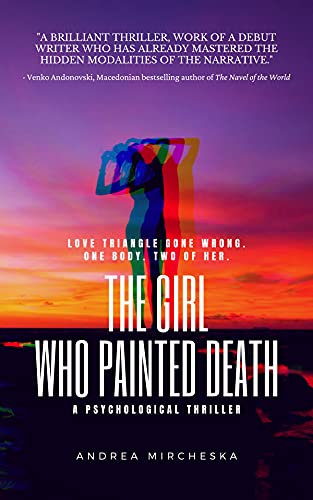
The girl who painted death
by Andrea Mircheska

I LOVED The Girl Who Painted Death as a window into real people’s lives and pasts. I think the Balkan region, and Zagreb in particular, is steeped in intrigue and charm and makes for a wonderful setting for any novel, but especially one with threads of evil and hope running through it in equal and competing proportions. Indeed, I only wish I could’ve read this book while sitting in a smoky bar or cafe in Zagreb. And It was good to read a ‘Balkan novel’ that has gone beyond the Yugoslavia war.

Julie moves from her childhood home in Macedonia to live with a friend in Croatia after her sister and father are killed in a mysterious accident/incident. She works in a bar by night and studies art/painting by day. While attending an exhibition she meets Adam, a successful, young, architect and a romance begins. Julie finds he has cheated on her and as she struggles to make sense of this, threatening letters begin appearing in her apartment which she attributes to Adam. Adam disappears from her life, but the letters don’t. She is led back to her Macedonian home town where her father and sister were killed and the facts of that incident are uncovered to her.

The characters in this book were carefully crafted and released to the reader in manageable bites as the book and story unfolded. I really enjoyed how the complex relationships were slowly untangled as I worked through the plot.

And a most satisfying ending!

Books: Lord of the Nutcracker Men

The Lord of The Nutcracker Men
by Iain Lawrence

I found The Lord of the Nutcracker Men a very easy and enjoyable read.

After ten-year-old Johnny’s father volunteers for the British Army in WW1 and his mother starts a job in a munitions factory, he has to move away from the city and live with his aunty in a small, rural village. 

Johnny’s father was a toy-maker who whittled toy soldiers for Johnny. He continued to send new toy soldiers to Johnny from the frontline trenches. The plot is very clever and is rooted in Johnny’s games with his toy soldiers who parallel his father’s real-life experiences. 

Like everyone else, Johnny initially expects his father to be home for Christmas, but realises that that won’t be the case. As his father’s letters become more vivid and honest, Johnny comes to believe that he is controlling the war and his father’s fate in the war through his games with the toy soldiers his father makes and sends to him.

The characters are well-developed and the settings feel historically authentic. The threads to the plot are wonderfully wound together and it ticks along at a satisfying pace. The writing is honest and charming. The writing style is genuinely pleasant and works to create a richly-told story. I really enjoyed reading Lord of the Nutcracker Men and can recommend it to adults as well as the young-teen readers for whom it was primarily written.

Beans: Waiters are usually right

At Butler’s Chocolate Cafe (in Lahore), the coffee is always hot and flavourful and served in heavy, white, ceramic cups, always with a fine chocolate. I have tried them all (over several years) and my favourite was a very dark chocolate with a soft caramel filling. 

The staff are almost as good as the coffee, always polite and cheerful and they remembered me and my seating preference (in the quietest corner) and they remembered that when my cup was empty, yes, I’d like another, please. 

Photo by Rafel AL Saadi on Pexels.com

I was with a group of happy colleagues; our winter vacation was starting the next day so there several cheerful conversations around our table. The waiter worked his way around the customers.

Me: One black coffee please. Large. And a chocolate brownie please. 

Waiter: Yes Sir. And would you like me to vomit?

Now, I hate my job sometimes and if I were a waiter I’d probably hate my job enough to make me feel sick, but what?

Me: Excuse me, what did you say?

Waiter: Sir, would you like me to vomit?

I’m in a foreign country, English isn’t his first language. He has an accent. I have one too. It’s noisy at our table and my hearing is getting old. Think; what could he be saying?  Do you want milk and sugar? Is there anything else you’d like? Do you have a loyalty card? 

Me: I’m sorry, I didn’t understand. What did you say?

Waiter [slowly]: Do    you     want      me     to     vom     it?

Which is exactly what I thought he said.

Me: Sorry, just a moment.

I asked a colleague, ‘Can you please tell the waiter that I’m sorry, I don’t understand…’

She to the waiter: What did you say?

Me: No, not in English, ask in Urdu. 

She: He said he asked you if you want him to vomit. 

Me: What? 

She: You know, in the oven, because brownies are better if the chocolate pieces are melted. 

Me: [Facepalm] Do you want me to warm it?

She: Yes, that’s what he said.

Waiter: Yes, that’s what I said. 

Lesson: If a waiter ever asks if you want him to vomit, save time, accept that waiters usually know best, and just say yes (and always say please).  

Books: The Cat’s Table

The Cat’s Table
by Michael Ondaatje

The Cat’s Table is the story of 11-year-old Michael who is traveling from his father’s home in 1950s Ceylon due to a threat to his or his father’s safety, to live with his mother and attend school in England. The departure from Colombo is both sad and exciting.

Michael’s two on-board acquaintances, both also 11 years old and also bound for school in England, are tough-boy Cassius and the more studious Ramadhin. The trio is infected by their fellow passengers’ curiosity about all of the ships’ passengers. Unhindered by close adult supervision the trio explores the ship while closely observing (spying on) passengers. The three weeks of observations become their extended lesson on how to be adults. Michael’s distant cousin, Emily, helps him to manage his growing anxiety while aboard, as he nears England and his new life and a first-class passenger, Flavia Prins, whose husband is an acquaintance of Michael’s uncle, keeps a slight watch over him, while also serving the trio as their primary source of on-board gossip.

The fellow-passengers are the story’s entertainment and the boys’ lessons in life and adulthood. Miss Lasqueti keeps pigeons and wears a vest of pockets for her birds. Asuntha is a recluse who protects a fatal secret. Sir Hector de Silva lies in his cabin dying because of a curse. Mr Fonseka is an eccentric teacher and a recluse who is protected by his books. Mr Daniels tends his garden of exotic plants in the ship’s hold. Max Mazappa is a jazz musician who is down on his luck and who attracts the amorous attention of Miss Lasqueti, but disembarks when the ship is in Port Said. A rollerskating Australian girl appeals to the boys, but also frightens them. And most-exciting of all is the guarded and bound prisoner who can be seen exercising on deck late in the night. The boys are desperate to know what his crimes were and eventually learn that he is associated with some of the passengers.

Ondaatje writes so beautifully well, at an easy pace, and with a deft ability to paint a vivid scene that I could read all of his books repeatedly (and have done so). 

The Cat’s Table might well be his best work, in my opinion. I enjoyed every page and read it slowly, like it was a fine cup of coffee – one sip, one page, at a time.

Shortly after reading The Cat’s Table I was fortunate to stay in the hotel described in the book’s first chapters, overlooking Colombo’s passenger ship terminal – a most evocative experience. And the coffee at the cafe through the back of the Barefoot shop…, well…, I’ll write separately about that.